

How to Jumpstart Your Business Development Success in Three Easy Steps: Phase Two
Phase Two is focused on you. It’s about understanding your unique strengths and skills, and then communicating and promoting them effectively and consistently to your desired audience. You want your brand to be authentically you, based on your strengths and advantages, distinguishable from others, valuable to your market, and sustainable over time.
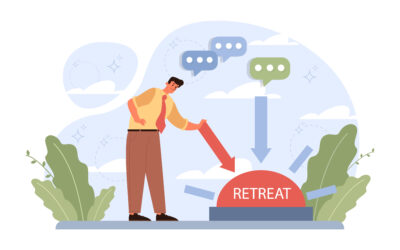
Seven Great Ideas for a Partner Conference or Retreat
It is now a number of decades (don’t ask how many!) since I first attended a law firm partner retreat as a newly minted partner. Since that time, I have facilitated, led or spoken at many professional service firm retreats and conferences all over the world. They seem to divide into seven basic areas of focus, although of course there may be more areas to consider or variations on the same theme.

Resolving conflict between partners and overhauling partner remuneration
I have previously written several articles in the Edge Communiqué[1] regarding the resolution of partner conflict. In writing this article I want to start a discussion about a different aspect of partner conflict than I have previously written about, and that is the extent to which entrenched conflict between partners can impede a reconfiguration of […]

How to Jumpstart your Business Development in Three Easy Steps: Phase One
No matter where you are age and stagewise, you can learn (or reengage) strategies and tips and become better at business development. Whether you’re motivated and committed to a deep dive and doubling down on your efforts – the start of a New Year and an uncertain economy can have that affect – or you just want to re-energize this part of your practice – there are countless options you could take that will make a marked difference. In this article, we will start with three.

Ten Obstacles to Effective Strategy
Ten Obstacles to Effective Strategy In this article I examine the main reasons why professional are firms are typically littered with uncompleted strategic projects and failed initiatives. The ten obstacles that I have identified can of course be addressed by better processes. However, in addition, I plan in an ensuing article to set out what […]

The Mid-Sized Full Service Commercial Firm “Playbook”
I work with as many “Mid-sized” commercial law firms as I work with large regional, national or global law firms. As the industry continues its multi-decade embrace of operating scale (bigger is better, or at least more efficient!), what does this trend mean for commercial firms that don’t choose to anchor their success to hiring […]

The Client Bear Hug
The Client Bear Hug Since law firms became professionally managed businesses, the profit-generating flywheel of firms has kicked into higher gear. While correlation ≠ causation, law firm financial performance is exceeding all 12-15 year old expectations of market watchers. With so much financial success in the rearview mirror, how do ambitious firms capture new revenue […]

Designing Law Firm 2030: start now, rethink everything, stay agile
2022 has opened to news of yet another wave of Covid-19 lockdowns and restrictions across many parts of the globe due to the Omicron variant. It can be tough to see much light at the end of the tunnel. But on 19 January the UK government signaled what they dearly hope will be ‘the beginning of the end’ for pandemic restrictions there. Compulsory face-mask wearing in indoor public spaces has ended and the requirement to self-isolate if testing positive is likely to end in March. Most immediately, and significantly for legal businesses, the work-from-home guidance that has been in place for most of the last two years has been retracted.

Struggling to craft a meaningful purpose statement? You’re not alone
Law firm leaders may face challenges coming up with a definitive purpose statement for the business, but if they can get it right the declaration can bring partners and employees closer together, writes Joel Barolsky.

Partnership – Dotting the i’s: Identity, Integration and Incentives
While much time is dedicated to recruiting and retaining associates, developing business and streamlining operations, is there an on-going effort to assure that partners are aligned, collaborative, productive and motivated? Does management have a pulse on the partnership and an awareness of issues that need to be addressed?